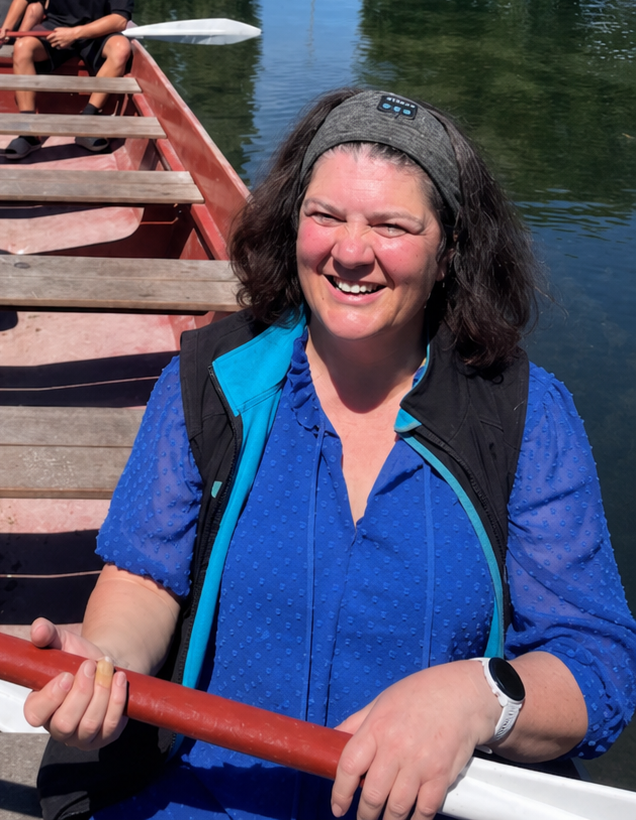
Every educator paddles differently

What kind of paddler are you?

A New Zealand-born teaching framework for educators who care about safer learning, stronger practice, and systems that leave footprints.

Ngā Hoe e Waru was forged through real classrooms, real learners, external moderation, quality systems, and the daily work of holding the waka steady when the room gets complex.

Get the Paddle Reflection Guide
The content is the landscape. The paddles move us through it. A practical one-page guide built from real classrooms, real learners, and teaching that leaves footprints.
Thanks. Check your inbox, the guide is on its way. — Gail
We respect your privacy. No spam. Unsubscribe anytime.
Education
Healthcare
First aid
Instructor development
Quality systems
The heart of the framework

Before the waka, there is a story. After the journey, there is evidence.

Learners, tutors and organisations never arrive empty. They bring confidence, pressure, habits, culture, fear, skill, ego, fatigue and experience. Ngā Hoe e Waru helps educators notice what people bring, paddle with them well, and leave visible footprints that show the learning journey happened.

People-focused
Putting wellbeing, safety and connection at the centre.
Practical
Ready to apply. Built from real teaching experience.
Culturally grounded
Honouring Te Tiriti, mātauranga Māori and diverse perspectives.
Evidence-informed
Leaving footprints so learning and systems stand up over time.
If it matters,
it leaves footprints.

Some footprints show where people arrived from. Some show where they needed support. The strongest learning journeys leave clearer footprints as people step back into their own homes, workplaces and communities.

The eight paddles

The content is the landscape. The paddles move us through it.

Each paddle is a learnable, repeatable teaching practice. Together, they help educators build learning environments that are safer, clearer, more relational and more defensible.

1
Check the Weather
Tirohia te Āhua o te Rangi
Read the room before the session begins.
2
Pack Light
Tākaia Kia Māmā
Carry only what learners need to move forward.
3
Hold the Waka
Puritia te Waka
Create the structure that lets learning feel safe.
4
Respect the Water
Ārohia te Wai
Honour the learner, the environment and the knowledge.
5
Paddle Together
Hoea Ngātahi
Turn learners into participants, not observers.
6
Guide the Journey
Ārahina te Haerenga
Guide, don’t drag. Set direction and scaffold practice.
7
Look Around, Notice the Beauty
Titiro Ake, Kia Miharo
Notice progress, confidence and capability emerging.
8
Anchor the Learning
Whakatokia te Mātauranga
Help learning hold beyond the room.
“Today, we paddled together as a bunch of strangers. Now take what matters, build your own waka, and paddle with the people who matter to you, at home, at work and in your communities.” Gail Pomare
Start your journey today
Download your free Paddle Reflection Guide.

The content is the landscape. The paddles move us through it. A practical one-page guide built from real classrooms, real learners, and teaching that leaves footprints.

Get your free guide
Thanks. Check your inbox, the guide is on its way. — Gail
We respect your privacy. No spam. Unsubscribe anytime.